
Bring the Bucket Along
Breaking patterns of thought and response through the grace of awareness
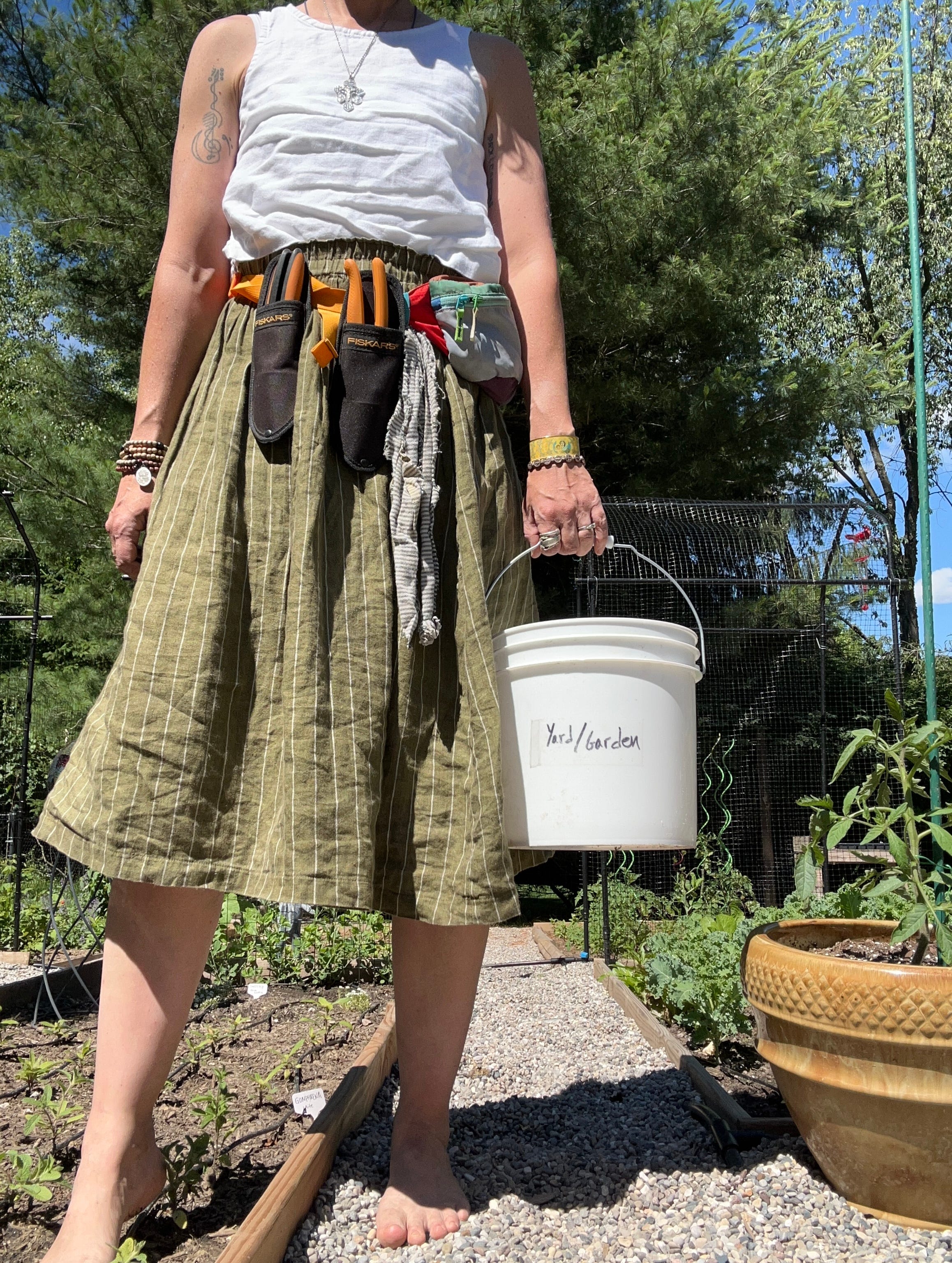
My friends. I’m here to admit to you a ridiculously unhelpful gardening habit I have. Every day I walk through my garden, inspecting and admiring. I notice new growth, keep an eye out for bugs, and straighten irrigation lines. Inevitably, on these daily walks I encounter weeds. I can’t just leave them when I spot them, so I pull them. One, and then another and another, and soon I have a whole fistful of weed sprouts. But then—OH! A bloom! I’ve gotta cut it. But since I didn’t bring a bucket with me for the weeds, I drop them in a pile on a garden bed—as if I would come back later to gather them and throw them out. That has never happened. This little habit, as minor and innocuous as it may seem, has probably led to the doubling of weed pockets throughout my garden. Many uprooted weeds don’t just disappear. They regrow.
I would venture to say that little habits and patterns of behavior that seem innocuous are one of the major battlegrounds of the spiritual life. Particularly when it comes to our relationships and the way we interact with others, we tend to act in very predictable ways. We form patterns of communication based on previous interactions, our own wounds, and our temperaments, and after many years of practice, our interactions with those around us tend to become quite cyclical—for better or for worse.
Recently, my husband and I have had to do more problem-solving together than usual. There is conflict outside of our relationship that is impacting us, and new elements of our shared life that we have to figure out together. These things are not bad in and of themselves—in fact, there is a significant opportunity for us to grow together here. But we have very different temperaments and communication styles. I am intuitive and relationship-driven, while my husband is concrete and facts-driven.
A few weeks ago, we had to have an important conversation. I was given the grace to see something before we even sat down to talk.
I saw it like a chess game all laid out before us. I would lead with this comment and he would inevitably reply in this way, and his body language would say that. I would feel frustrated by this, and then express my opinion about that. He would feel disrespected by my frustration, and would reply exactly like this… you get the point. By the end, I knew we were likely to be in a conflict that did not exist before we began. We have settled into familiar communication ruts, and they have become so predictable that I didn’t even need to allow the conversation to play out… I knew what it would look like.
Because God gave me the grace to see this all before it happened, I stopped. I prayed, and I prayed hard. I promised God that I was not going to react out of my emotions during our conversation. I stopped envisioning how my husband was going to respond, and vowed to receive him and fully consider every aspect of what he had to say on the topic. I decided to not question his intentions or actions, and just receive him exactly as he presented himself. I decided to listen more than I spoke, and to be praying throughout the conversation, handing over to Jesus every emotion or reaction that popped up.
I have been working diligently in my garden and in my life to pull all of the little weeds of my sins and imperfections, but in that situation I was about to just drop them in the soil again and let them take root in a difficult conversation. Instead, I went and grabbed a bucket for the weeds. I needed somewhere to put the thoughts and reactions I had already uprooted, before they found their way back into the conversation by careless habit.
As we deepen our prayer lives and cooperate with grace, God begins to reveal these hidden patterns that impede His work within us. Many times these patterns begin hidden in our minds—in ruminations and imagined conversations left unchecked because no one else can see them.
If we are going to do the work to pull the weeds, we need to bring the bucket along.
We need to pause, throw the weed in the bucket and ask God, Why do I always respond in this way when a particular situation arises? Where have I been hurt that I need to heal? What might happen if I respond differently?
This important pause—this acknowledgement of a pattern and desire to break it—is the place where we allow God to intervene. It is in these moments that He will give us the grace to see something in a new light, respond in a new way, create new patterns of thinking and behavior that allow for the free movement of grace and the fruitful reciprocity of holy communication. These pauses are moments where prayer and virtue are given a chance to bear fruit.
That conversation with my husband went entirely different than any we had ever had before in a very positive way. He felt respected and heard, I left the conversation peaceful, with a clear conscience and much to pray about. Conversation never entered the realm of conflict. Our capacity to understand each other increased, because defensive walls didn’t need to be built. We grew together.
Now, this instance I am relaying happened weeks ago, and I have certainly not done this perfectly since then. But it revealed to me something very important. I don’t want any aspect of my life to be ruled by patterns that I created in my woundedness. I want my every interaction to be governed by grace rather than habit, and from truth instead of imagination. I want every word I speak to come from a place of love, not self-protection. This practice requires me to bring the bucket along—to pause and pray, and to actually remove what I have pulled—so that what I have uprooted does not take root again.
Thank you, Whitney. This essay really helped me this morning.
You and I are living parallel spiritual lives : ) My husband and I just had a conversation the other day where we managed to communicate, and I realized something I was casting in a relational light, he was casting in a logistical, household management light. And that made me realize, first that I had read my own framework into something and projected what wasn't there, and second that his heart was in exactly the right place according to his vocation as leader and captain of our ship. And that helped me realize how I can love and appreciate him more deeply.
I left the conversation and had to go grocery shopping, and I was walking around the produce section beaming with smiles because I was so thrilled at the communication and the discovery that I was the one who misinterpreted something and learned a revelatory lesson. It is interesting how uncovering your own faults, in the life of grace, can produce a radiant joy. It is like turning on the lights so you can finally see better. I hope to mature to the point of not even needing to have these conversations necessarily, but at this point, at least having them well was a stepping stone of growth. What is amazing is that with grace we can be re-habituated to a new mode of reflexive being, one in accord with grace. In the meantime, St. Therese helps me to see patience with my imperfections as the ground of growing in sanctity.
Anyway, I have been struck by how very similar our paths have been. From St. Ignatius to mental prayer to gardening imagery for the life of the soul to the power of tiny acts of obedience to our temperaments and predominant faults...that we are undergoing the same lessons from afar is an affirmation of the One True God and His ways in the soul by the Spirit. All glory be to Him.